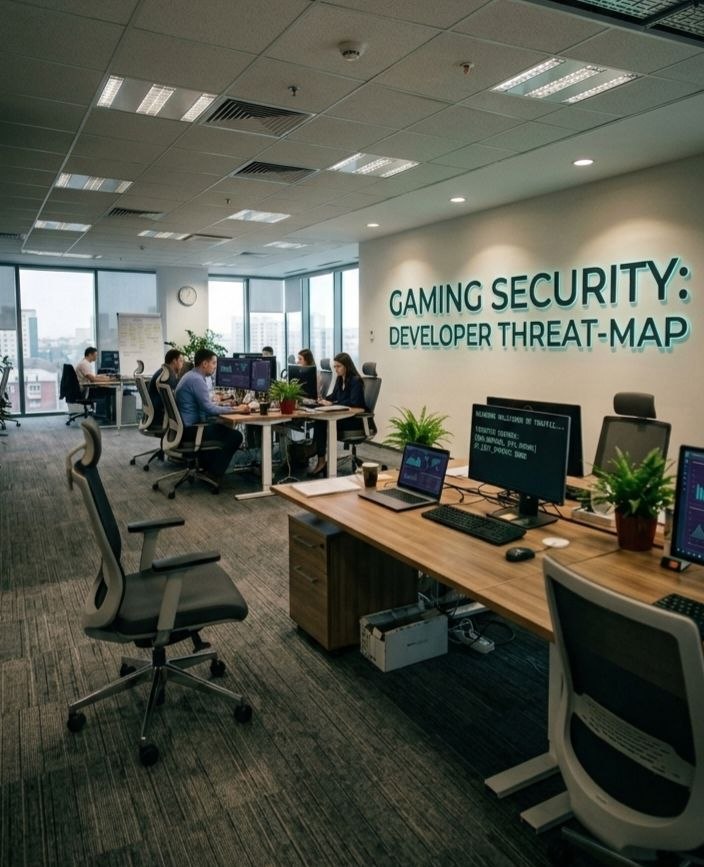
When it comes to Gaming Security, modern gaming infrastructures are prime targets…
Modern gaming infrastructures are prime targets for automated cyber threats, ranging from disruptive Distributed Denial of Service (DDoS) attacks to extensive botnet campaigns aiming for credential stuffing. For game developers and studio engineers, safeguarding the backend infrastructure requires an active, multi-layered approach centered around threat-mapping and real-time network evaluation.
Effective Threat-Mapping for Live-Service Games
To minimize latency and protect player databases, developers must implement early detection frameworks. Identifying malicious IPs before they interact with internal microservices allows the firewall to drop hostile traffic at the network edge.
Key Detection Metrics to Track:
- Velocity Anomalies: A high volume of distinct connection requests from a single IP pool within milliseconds.
- IP Reputation Scores: Correlating inbound telemetry with live threat-intelligence feeds that track known bad actors.
- Behavioral Mismatches: Traffic patterns that deviate from standard player matchmaking or login sequences.
Dynamic Firewall Enforcement
Once a malicious IP cluster is flagged through threat-mapping, the infrastructure should automatically update its edge rules. Utilizing automated scripts alongside API-driven blocklists ensures that threats are neutralized programmatically, ensuring zero downtime and maintaining a seamless environment for legitimate users worldwide.
Best Practices for Gaming Security and IP Mapping
Implementing robust gaming security requires an active defense model that goes beyond static firewalls. When game developers map malicious IP addresses, they gain a clear cryptographic and geographical layout of where attacks originate. This intelligence allows server administrators to write automated edge rules that block malicious traffic before it hits the matchmaking databases.
To achieve maximum infrastructure resilience, technical teams should leverage centralized threat intelligence platforms. For example, integrating external specialized databases such as Cloudflare Security Services allows servers to cross-reference incoming telemetry with globally recognized bad actors in real-time. By linking your systems out to external resources, your automated scripts can immediately update local iptables or security groups without human intervention.
Furthermore, internal logging frameworks must be optimized to ensure compliance and quick forensics. Every detected threat-map instance should be archived internally within your secondary database infrastructure. Securing your internal links across your ecosystem—such as connecting front-end game clients safely to back-end microservices—creates a zero-trust network topology. This ensures that even if an attacker attempts credential stuffing or session hijacking from a residential proxy network, the internal gaming security subroutines will flags the behavior as a mismatch and drop the socket connection within milliseconds.
Ultimately, maintaining a comprehensive threat map is an ongoing cycle. Game telemetry shifts dynamically with every new patch or seasonal launch, meaning developers must consistently audit their API endpoints and log analysis pipelines to defend against evolving distributed denial of service tactics.
To minimize network vulnerabilities, engineering teams should consistently audit their active server channels. Utilizing specialized global verification systems like Cloudflare Security solutions helps filter out malicious traffic patterns at the network edge before they reach internal databases. This approach to data filtering creates an essential layer of protection for real-time multiplayer applications.
Furthermore, you can monitor threat telemetry updates directly on our platform under the Cyber Security News (https://alee-engarde-club.com/category/cybersecurity-news/) hub to stay informed about active botnets. Cross-referencing external data feeds with your internal architecture ensures a secure environment.
Continuous monitoring and real-time data adjustments remain the core foundation of contemporary network security architectures worldwide. Game servers require this constant feedback loop to maintain data integrity and protect active digital ecosystems against expanding vector attacks.
Continuous monitoring and real-time data adjustments remain the core foundation of contemporary network security architectures. Game servers require this constant feedback loop to maintain integrity.
This technical approach ensures total network protection across all live-service gaming nodes.
Leave a Reply